
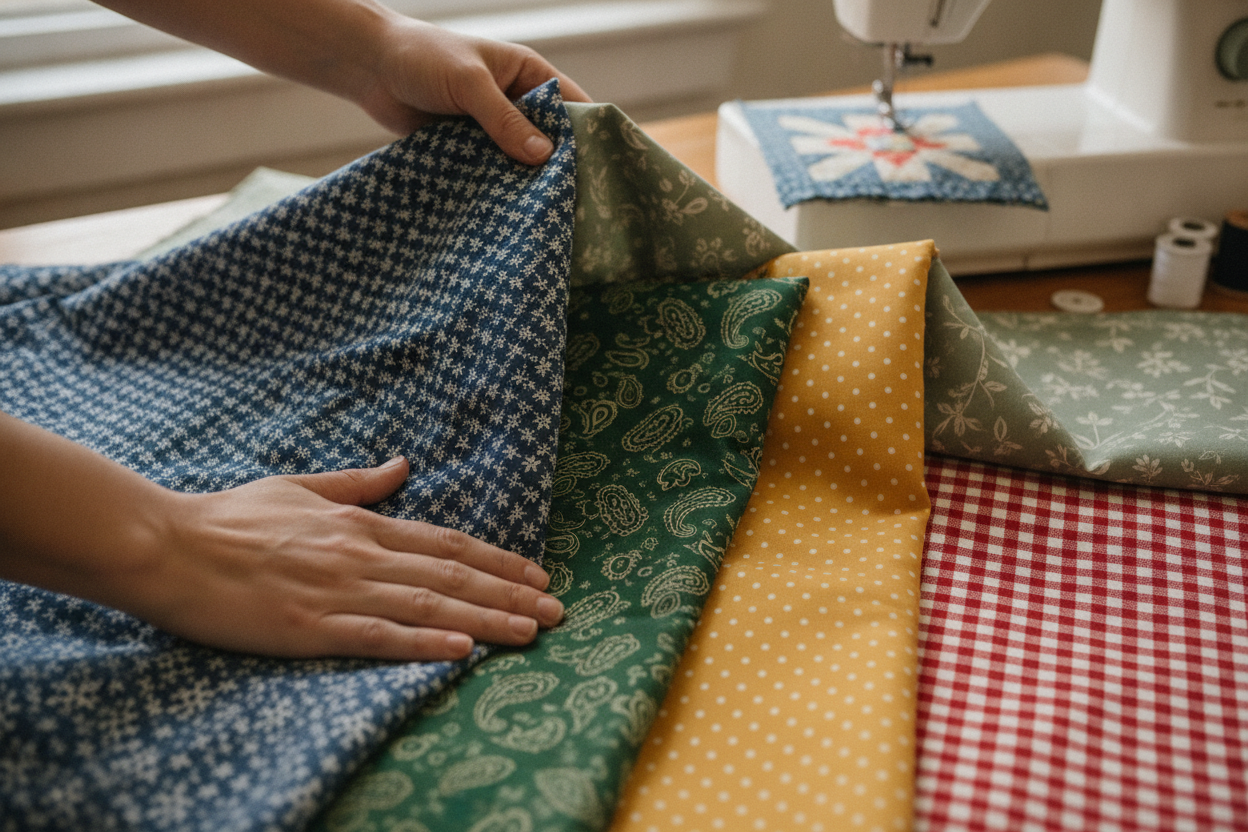
Fabric choice shapes the look, feel, and durability of every quilt. When shopping for quilting cotton, pay attention to weave, color saturation, and how the fabric feels in your hands. A tightly woven fabric usually cuts cleanly and holds its shape well, which is helpful when you are piecing blocks with many seams. If you are combining prints, think about contrast, scale, and how each fabric will behave once it is repeated across the quilt top.
Color planning is easier when you start with one fabric you love and build around it. That print can inspire the rest of your palette, whether you want something soft and calm or bright and energetic. Solids, blenders, and small-scale prints often work well as supporting fabrics because they let the feature fabrics stand out without making the quilt feel crowded. It helps to lay your fabrics on a table or design wall and view them from a distance before cutting.
Durability matters too, especially for quilts that will be used often or gifted to family. Prewashing can reduce shrinkage and dye bleed, while careful pressing helps the fabric stay flat for accurate piecing. If you are making a quilt for daily use, choose fabrics that can handle regular washing and still look good over time.
Good fabric selection is not just about appearance. It is about creating a quilt that feels balanced, lasts longer, and reflects your style. With a little planning, your fabric choices can make the entire sewing experience smoother from the first cut to the final binding.
Leave a Reply