
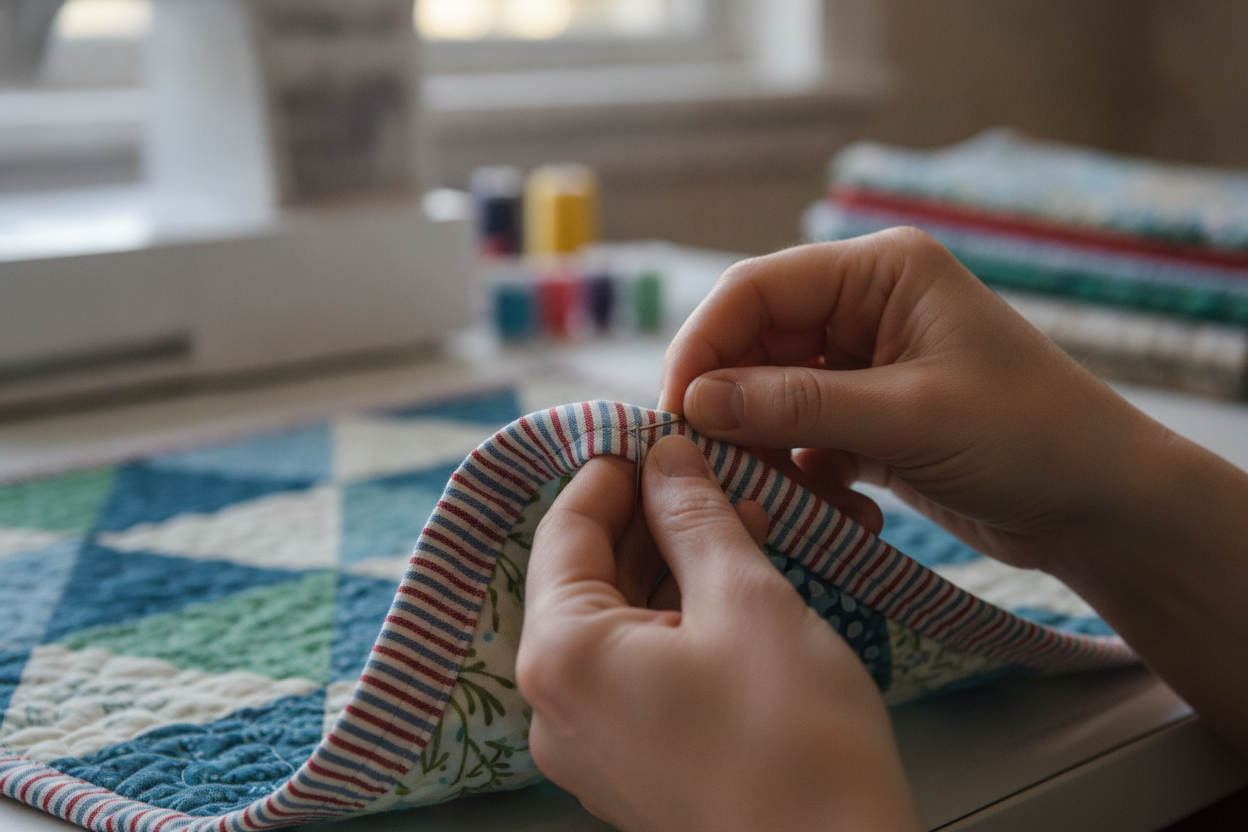
Binding is the final detail that frames a quilt and gives it a finished look. It may seem small compared with piecing or quilting, but a neat binding can dramatically improve the overall result. Start by cutting your binding strips on the grain that works best for your project, then join them carefully so the seams are not bulky. Pressing the strip in half lengthwise helps it feed smoothly as you attach it.
When sewing binding to the quilt front, keep your seam allowance steady and stop before each corner so you can fold clean mitered edges. Taking time with the corners makes the whole quilt look more professional. After the front is attached, wrap the binding to the back and hand stitch or machine stitch it in place, depending on your preferred finish. Both methods can look beautiful when done carefully.
It helps to test your binding width before committing to the full quilt, especially if your quilt has thick batting or dense quilting. Too narrow, and the edge may not cover the seam well; too wide, and it can feel loose or bulky. A balanced width supports the quilt without overwhelming the design. Choosing a binding fabric that complements the quilt top will also bring the whole piece together.
With practice, binding becomes a satisfying part of the process rather than a chore. It is the moment when a quilt truly feels complete, ready to be used, gifted, or displayed with pride. A well-bound quilt not only looks polished but also stands up better to everyday handling and washing.
Leave a Reply