
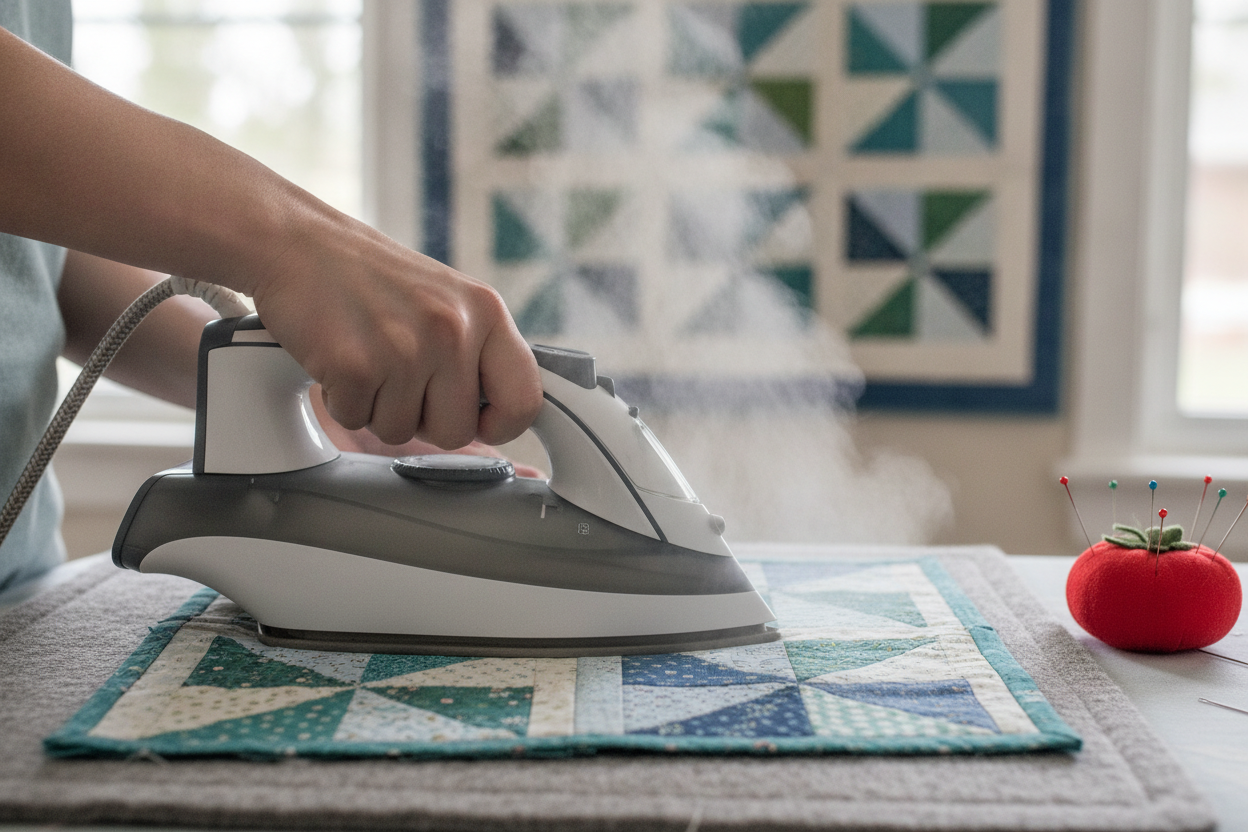
Pressing may seem like a small step, but it has a big effect on quilt accuracy. When seams are pressed well, blocks lie flatter, corners line up more cleanly, and the finished quilt looks more polished. Many quilters prefer to press rather than iron back and forth, because lifting and setting the iron helps avoid stretching fabric out of shape. That gentle approach can make a noticeable difference in piecing precision.
It helps to decide in advance how you will press seams for a project. Some patterns work best with seams pressed to one side, while others benefit from open seams to reduce bulk. There is no single method that fits every quilt, so it is useful to think about the block structure before you begin. A little planning now can save frustration later when you are trying to match intersections.
Temperature and steam matter too. Different fabrics and battings respond differently, so it is wise to test your settings on scraps first. Too much steam or pressure can distort delicate pieces, especially on bias edges. A clean pressing cloth can also protect lighter fabrics if you are working with dark dye or stubborn creases.
Good pressing habits support every stage of quilting, from cutting and piecing to final assembly. Once you get used to pausing and pressing at the right moments, your seams tend to behave more predictably. That means less ripping, better alignment, and a smoother path to a finished quilt you can be proud of.
Leave a Reply