
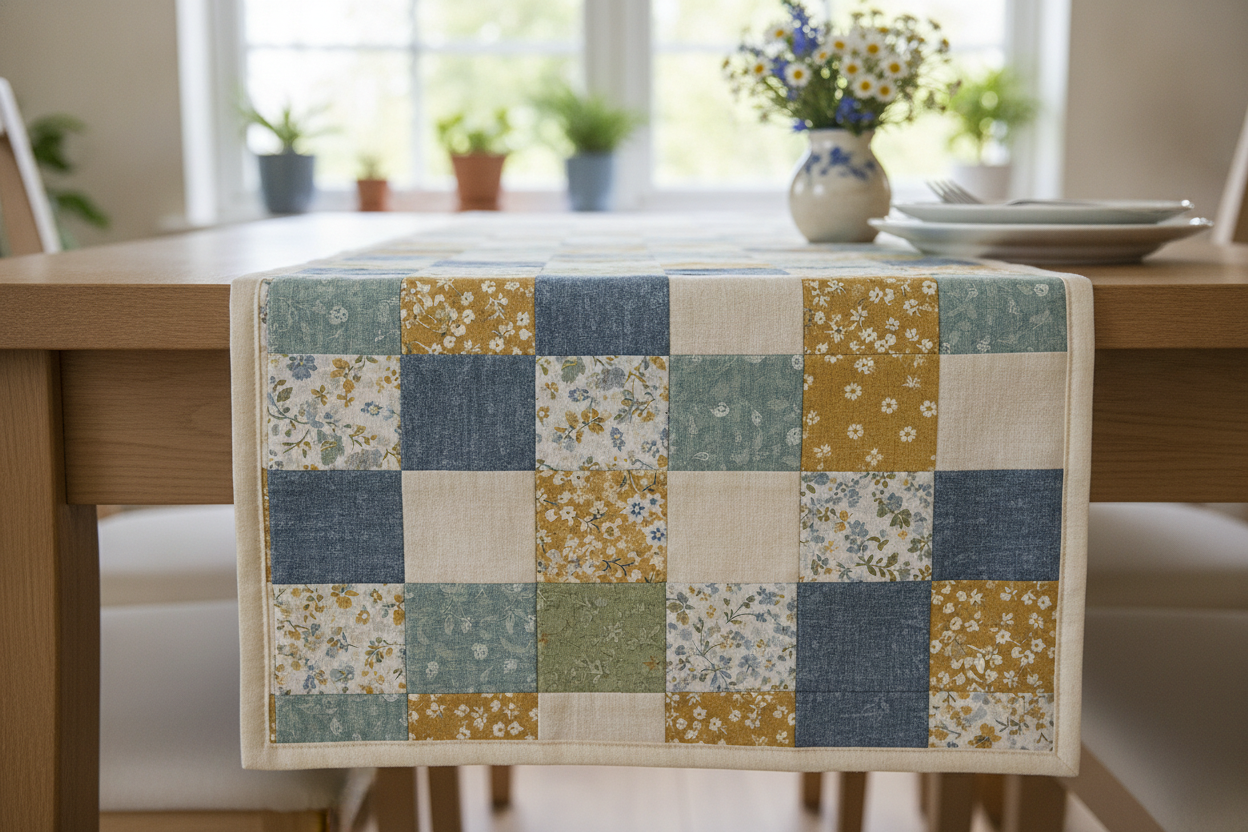
A patchwork table runner is one of the most satisfying projects for quilters because it delivers quick results and lots of design flexibility. You can use leftover fabrics, a favorite seasonal palette, or a coordinated bundle from your stash. The key is to keep the block size simple and the layout balanced so the finished runner looks intentional rather than random.
Start by choosing fabrics that work well together in value and scale. Cut consistent squares or rectangles, then sew them into rows with a steady seam allowance. Pressing seams as you go will help the rows line up cleanly. If you want a more modern look, use larger pieces and fewer prints. If you prefer a traditional feel, mix smaller prints and alternate colors to create movement across the runner.
Once the top is complete, layer it with batting and backing, then quilt it with straight lines, gentle curves, or a simple crosshatch. A table runner does not need heavy quilting to look finished, but the stitching should support the design and keep the layers secure. Trim the edges carefully before adding binding so the final piece lays flat on the table.
This kind of project works well for gift giving, seasonal decor, or decorating a dining table without committing to a large quilt. It is also a great way to practice piecing and finishing skills on a smaller scale. By the time you finish one, you will likely already be planning the next.
Leave a Reply